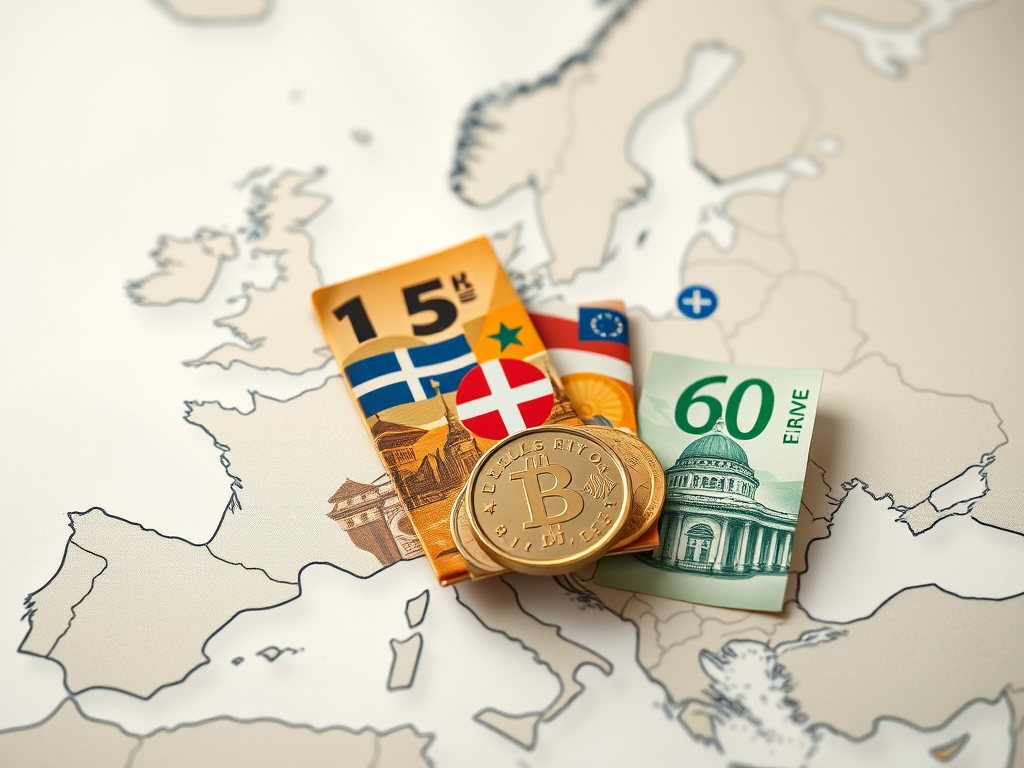
When considering the economic landscape of Europe, one might wonder why some of its wealthiest nations—such as Sweden, Norway, Denmark, and Switzerland—continue to use their own national currencies rather than adopting the euro, the shared currency of much of the European Union. At first glance, it might seem logical for all prosperous European countries to unite under a single monetary system, as it could potentially streamline trade, travel, and economic policy across the continent. Yet, the decision to retain their own currencies is the outcome of a complex interplay of historical, economic, political, and cultural factors that reflect each country’s priorities and experiences.
Thank you for reading this post, don’t forget to subscribe!To understand this choice, it’s important to first look at the origins and goals of the euro. The euro was introduced as a common currency by the European Union in 1999, with the intention of fostering closer economic integration, reducing transaction costs, and promoting political unity among member states. Today, nineteen of the twenty-seven EU countries use the euro, forming what is known as the Eurozone. The common currency facilitates easier cross-border trade and investment, simplifies travel, and aims to insulate member economies from currency volatility.
However, the euro also means that participating countries relinquish some control over their monetary policy. Interest rates, money supply, and currency valuation are all set by the European Central Bank in Frankfurt, rather than by individual national banks. For many countries, especially those with economies closely tied to their neighbors or reliant on cross-border trade, this tradeoff makes sense. Yet, for some of the richest and most stable countries in Europe, the calculus is different.
Take Sweden, for example. Sweden is a member of the European Union and, in theory, is obligated to adopt the euro at some point in the future. However, in practice, Sweden has chosen to retain the Swedish krona. The Swedish public voted against joining the euro in a 2003 referendum, and subsequent political leaders have respected that outcome. For Swedes, retaining the krona means preserving control over national monetary policy. The Swedish central bank, known as the Riksbank, can adjust interest rates and implement policies tailored specifically to Sweden’s unique economic conditions. This flexibility proved invaluable during financial shocks, such as the global financial crisis of 2008 and the economic disruptions during the COVID-19 pandemic. Swedish policymakers were able to respond rapidly, implementing stimulus measures and adjusting interest rates in ways that might not have been possible under the one-size-fits-all approach of the European Central Bank.
Denmark presents a slightly different case. Denmark is also a member of the European Union, but it negotiated an official opt-out from adopting the euro as part of the Maastricht Treaty in the early 1990s. Like Sweden, Danish voters rejected joining the euro in a 2000 referendum. Nevertheless, Denmark maintains very close economic ties with the Eurozone. The Danish krone is pegged to the euro through a fixed exchange rate regime, meaning its value is kept stable relative to the euro. This arrangement allows Denmark to enjoy many of the benefits of currency stability and economic integration without fully surrendering its monetary sovereignty. If circumstances ever required Denmark to adjust its monetary policy for domestic reasons, it retains the freedom to do so.
Norway, on the other hand, is not a member of the European Union at all. Instead, it participates in the European Economic Area, which allows it access to the EU’s single market without being subject to many of its rules—including the adoption of the euro. Norway’s decision to retain the Norwegian krone is deeply rooted in its political culture and economic priorities. Norway is a wealthy country, largely due to its abundant natural resources, especially oil and gas. Its government manages these resources through the world-renowned Government Pension Fund Global, one of the largest sovereign wealth funds on the planet. By controlling its own currency, Norway can pursue monetary policies that reflect its unique economic structure and priorities, such as managing the impact of volatile oil prices on domestic inflation and employment. The ability to set its own interest rates and adjust exchange rates is seen as essential to maintaining economic stability and protecting the value of its sovereign wealth.
Switzerland is another fascinating case. It is neither an EU member nor a Eurozone participant, and it fiercely values its independence and neutrality. The Swiss franc is one of the world’s most stable and trusted currencies, often considered a safe haven in times of global uncertainty. Swiss monetary policy is managed by the Swiss National Bank, which is highly regarded for its conservative and prudent approach. For Switzerland, adopting the euro would mean ceding a significant degree of control over its financial destiny. The Swiss economy is highly diversified, internationally oriented, and deeply interconnected with both the Eurozone and the broader global economy. Yet, the Swiss public and policymakers alike believe that maintaining the franc is vital to preserving the country’s economic stability, low inflation, and reputation for financial prudence. The Swiss banking sector, renowned for its stability and discretion, is also seen as benefiting from the independence afforded by a national currency.
Beyond the purely economic arguments, there are also important cultural and political reasons why these countries have chosen to stick with their own currencies. National currencies are powerful symbols of sovereignty and identity. The krona, krone, and franc are more than just units of exchange; they are part of each nation’s heritage and self-image. For small countries in particular, the ability to control their own economic policies—and to express their independence through their currency—can be a source of pride and reassurance in an increasingly interconnected world.
Moreover, the experience of the euro itself has made some countries wary of joining. While the euro has brought benefits to many, it has also exposed weaknesses in the economic architecture of the Eurozone. During the sovereign debt crisis that began in 2009, countries like Greece, Portugal, Ireland, and Spain faced severe economic turmoil. Because they shared a common currency, these countries could not devalue their own currencies to regain competitiveness or stimulate growth. Instead, they had to implement painful austerity measures and rely on financial bailouts from the European Central Bank and other EU institutions. For countries like Sweden, Denmark, Norway, and Switzerland, watching this crisis unfold reinforced the importance of retaining the ability to respond flexibly to economic shocks.
In addition, the criteria for joining the euro are not merely technical. They also involve a degree of political and economic convergence that some countries are not eager to pursue. Adopting the euro would require deeper integration with EU fiscal and economic policies, potentially limiting the scope for independent decision-making in areas such as taxation, government spending, and social welfare. For countries with strong traditions of political autonomy and high standards of living, the perceived risks of joining the euro may outweigh the potential benefits.
It’s also worth noting that these countries have managed to maintain high levels of prosperity, low unemployment, and robust social welfare systems while using their own currencies. Their success challenges the notion that a common currency is necessary for economic growth and stability. In fact, their ability to chart their own course—adapting monetary policy to suit national conditions, managing exchange rates to support exports, and responding promptly to financial crises—may have contributed to their resilience and prosperity.
Of course, using a national currency is not without its challenges. Exchange rate fluctuations can introduce uncertainty for exporters and importers, and travelers or businesses operating across borders may face higher transaction costs. However, modern financial instruments and currency hedging strategies can mitigate many of these risks. Additionally, countries like Denmark manage currency stability through fixed exchange rate regimes, while Sweden and Norway maintain strong, credible institutions that inspire confidence in their currencies.
Furthermore, the decision to retain a national currency is not irrevocable. If the economic or political calculus were to shift, these countries could, in theory, choose to adopt the euro in the future. For now, however, public opinion remains firmly in favor of maintaining monetary independence. Referendums in Sweden and Denmark have shown clear majorities opposing euro adoption, and in Switzerland and Norway, there is little appetite for closer integration with the EU.
In summary, the choice by Sweden, Norway, Denmark, and Switzerland to retain their own currencies is the product of careful consideration of their unique economic circumstances, political cultures, and national priorities. For these countries, the benefits of monetary independence—control over interest rates, the ability to respond quickly to economic shocks, and the preservation of national identity—outweigh the potential advantages of joining the euro. Their experiences illustrate that there is no one-size-fits-all solution to the challenges of economic integration in Europe. While the euro has been a success for many, the decision to join or remain outside the common currency area ultimately depends on each country’s values, interests, and vision for its future.
The story of why some of Europe’s richest nations maintain their own currencies is, in essence, a story about choice—about the right to tailor economic policy to national needs, to preserve the symbols of sovereignty, and to respond flexibly to the ever-changing landscape of the global economy. It is a testament to the diversity of approaches that coexist within Europe, each shaped by history, geography, and the aspirations of its people.
As the European Union continues to evolve, the debate over monetary integration will undoubtedly persist. For now, however, Sweden, Norway, Denmark, and Switzerland stand as reminders that prosperity and stability are not solely the products of shared currencies or overarching institutions. They are also the result of prudent policymaking, strong institutions, and the ability of nations to choose the paths that best serve their citizens. In a continent defined by both unity and diversity, the enduring independence of these countries’ currencies speaks to the enduring importance of national agency in a globalized world.
Looking ahead, it is possible that economic, political, or social changes could alter the balance of considerations for these countries. Demographic shifts, technological advancements, changes in global trade patterns, or new challenges such as climate change could prompt a reassessment of the costs and benefits of monetary independence versus deeper integration. The euro itself may also evolve, potentially addressing some of the concerns that have kept wealthy non-Eurozone countries on the sidelines.
It is also conceivable that external shocks—such as new financial crises, geopolitical tensions, or shifts in the global balance of power—could influence public opinion and policymakers’ decisions. If, for example, the euro were to become even more widely used in global trade and finance, or if the benefits of deeper economic integration became more compelling, these countries might reconsider their positions. Alternatively, if the experience of the Eurozone were to reveal further vulnerabilities or challenges, the commitment to maintaining national currencies could become even stronger.
Ultimately, the decision to use a national currency or join a currency union is a deeply consequential one, with far-reaching implications for economic stability, political autonomy, and national identity. It is a decision that must be made with careful consideration of both the opportunities and the risks, the lessons of the past and the uncertainties of the future. For Sweden, Norway, Denmark, and Switzerland, the current choice reflects a profound confidence in their ability to navigate the complexities of the modern world on their own terms.
Their example offers valuable insights for other countries grappling with questions of economic integration and sovereignty. It demonstrates that there are multiple paths to prosperity, and that the best path is the one that aligns most closely with a nation’s values, institutions, and aspirations. In a rapidly changing world, the capacity to adapt, to make informed choices, and to preserve the tools of economic management may prove to be among the most important assets any country can possess.
In the final analysis, the continued use of national currencies by some of Europe’s richest countries is not just a matter of economic calculation. It is an expression of their unique histories, their enduring commitment to self-determination, and their belief in the value of flexibility and independence. It is a choice that speaks to the heart of what it means to be a nation in an interconnected world—a choice that will continue to shape the future of Europe for years to come.
Leave a Reply