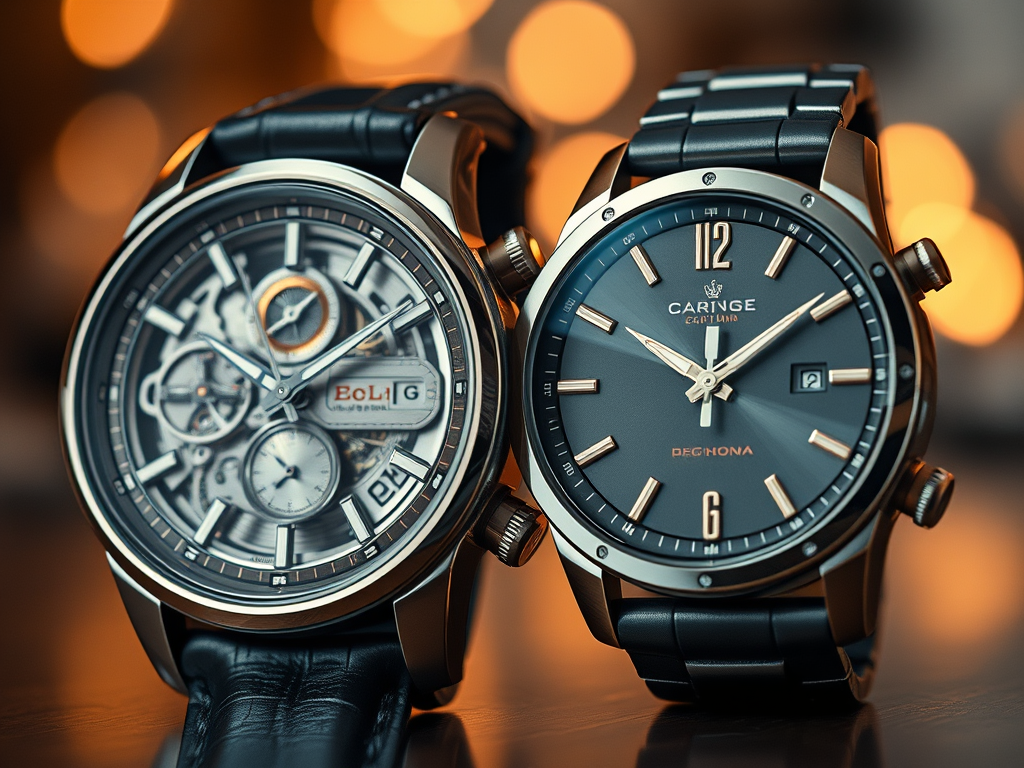
We continue our series exploring the watch industry. You can read the earlier published articles about How CNC Machines Transform Watch Manufacturing Today (1st episode). Another topic is Mechanical Movements vs Quartz: Key Differences Explained (2nd episode). The 3rd episode is about High-End Quartz Watches: The Luxury You Didn’t Expect (the 3rd episode). Today, we continue the journey to understand watch weight: Heavy vs. Light Mechanics.
Thank you for reading this post, don’t forget to subscribe!A good mechanical watch can be either heavy or light, as modern luxury watchmaking has evolved beyond the idea that “heaviness equals quality”. While traditional luxury watches are often substantial due to solid metal movements and cases, cutting-edge high-end brands now compete to create the lightest watches possible using advanced materials. [1, 2, 3]
Why Many Good Mechanical Watches are Heavy
Traditionally, a “hefty” feel has been associated with quality, durability, and value. [4, 5, 6]
- Solid Metal Movements: Mechanical movements are composed of numerous metal gears, plates, and bridges (often brass or steel), which naturally add more weight than the plastic or thin alloy parts found in many quartz watches.
- Automatic Rotors: Automatic watches include a weighted metal rotor (sometimes made of gold or tungsten to increase winding efficiency) that adds significant mass.
- Precious Materials: High-end brands like Rolex often use dense materials. For example, a platinum Rolex can weigh up to 270g, while an 18k gold version may weigh around 190–220g.
- Case Thickness: Mechanical watches are generally thicker to accommodate their complex internal parts, which requires more case material. [5, 7, 8, 9, 10, 11]
Why Some High-End Mechanical Watches are Ultra-Light
Modern “haute horlogerie” (high-end watchmaking) uses aerospace technology to achieve extreme lightness without sacrificing strength. [12]
- Titanium: Brands like Grand Seiko and IWC use titanium, which is 40–60% lighter than stainless steel but equally strong.
- Carbon Fiber & Composites: Richard Mille is famous for creating mechanical watches that weigh as little as 18.83 grams (including the strap) by using carbon nanotubes and titanium-lithium alloys.
- Ultra-Thin Engineering: Bulgari’s Octo Finissimo uses titanium and record-breaking thin movements to create a “barely there” feel on the wrist. [1, 13, 14, 15]
Weight Comparison by Material
The same watch design will feel drastically different depending on its construction: [1]
- Carbon Fiber: ~1.7–1.9 g/cm³ (Lightest)
- Titanium: ~4.5 g/cm³
- Stainless Steel: ~8.0 g/cm³
- 18k Gold: ~15.0 g/cm³
- Platinum: ~21.4 g/cm³ (Heaviest) [3, 13, 16, 17]
Are you looking for a watch that feels substantial and “solid” on your wrist, or would you prefer a lightweight modelfor daily comfort and sports?
[1] https://www.the1916company.com
[3] https://www.thehourglass.com
[4] https://mohammadandsons.com
[6] https://timeandtidewatches.com
[7] https://www.botta-design.de
[10] https://www.watchobsession.co.uk
[11] https://www.the1916company.com
[12] https://www.bqwatches.com
[14] https://timex.com
[15] https://timeandtidewatches.com
[16] https://nomos-glashuette.com
Leave a Reply